

Jeremias da Costa
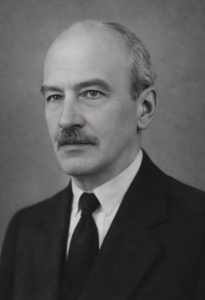 Dr. Jeremias da Costa, a prestigious rector, secondary school teacher, administrative manager, and Micaelense Republican politician, passed away on 7 May 1970, at his residence in São José, Ponta Delgada, at the age of 90.
He was born on 16 January 1880, in the parish of Conceição, in the municipality of Ribeira Grande. Initially destined for an ecclesiastical career, he studied at the Episcopal Seminary of Angra. Without completing the course, he transferred to the Primary Teacher Training School (Escola do Magistério Primário) in Ponta Delgada, where, after graduating, he served as a primary school teacher for several years. He subsequently qualified as a state scholar through a public competition held by the Directorate of Primary and Secondary Education, within the Ministry of the Interior, to study Natural Sciences at the University of Ghent (Belgium).
In 1912, he settled in Ponta Delgada, where he was later appointed to the former Liceu da Graça, becoming its Rector in 1919. During his teaching career, he introduced significant innovations in the teaching of Natural Sciences; aiming to improve the experimental aspect of the subject, he equipped the school’s chemistry laboratories, which at the time represented a major advancement for secondary education. He remained a professor at the National Lyceum of Ponta Delgada until 1948, the year of his retirement, reinforcing his lifelong dedication to secondary education on the island.
In 1921, as the Liceu da Graça no longer met the necessary conditions for secondary education, he was responsible in his capacity as President of the Executive Commission of the General Board of the Autonomous District of Ponta Delgada (a position he held between 1919 and 1924) and as Rector of the school for the acquisition of the Palace of the Baron of Fonte Bela (Paço do Barão da Fonte Bela), to install what is now the Antero de Quental Lyceum. He also promoted the development of Physical Education, notably through the construction of the school’s sports field, a pioneering structure within the educational landscape of that era.
Furthermore, in the political sphere, he was a prominent member of the Portuguese Republican Party, holding significant positions in the district administration of Ponta Delgada during the First Portuguese Republic. He also served as the Civil Governor of the Autonomous District of Ponta Delgada from 1 November 1924 to 28 September 1925, President of the Ponta Delgada Football Association from 1 December 1929 to 24 February 1931, a founding member of the Clube União Sportiva, and President of the Guild of Fruit and Vegetable Exporters of São Miguel. He remained steadfast in his democratic convictions during the Estado Novo regime, joining the Movement of Democratic Unity (MUD) of Ponta Delgada in 1945.
His name was given to one of the halls at the Antero de Quental Lyceum and integrated into the toponymy of the city of Ponta Delgada, in the parish of Relva. His name also appears among the founding members of the Cultural Institute of Ponta Delgada, highlighting his presence in the cultural and intellectual life of the region.
His funeral took place on 8 May, at 11:30 am, following a Requiem Mass at the Church of São José, from which the cortege proceeded to the São Joaquim Cemetery.


