

João Anglin
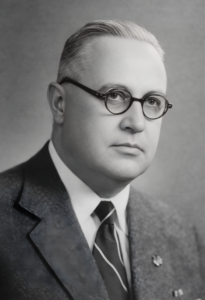 Dr. João Hickling Anglin, one of the most prominent figures in Azorean pedagogy, culture, and letters, passed away on 28 December 1975, at the São José Hospital in Ponta Delgada, at the age of 81.
He was born on 17 April 1894, in the parish of São Pedro, Ponta Delgada. He attended the Liceu da Graça and, upon completing his secondary studies, graduated in Germanic Philology from the Faculty of Arts at the University of Coimbra.
During the First World War, he served as a militia officer and commanded Portuguese troops in Angola, an experience that would later influence his work in education and culture.
In 1921, he returned to the Azores and began a long career at the Liceu Nacional de Ponta Delgada, where he taught until 1964. He served as the Rector of the Lyceum from 1926, with an interruption between 1935/36 and 1938/39. Furthermore, he was a professor and Director of the Primary Teacher Training School (Escola do Magistério Primário) in Ponta Delgada from 1943, contributing decisively to the training of several generations of teachers.
In the cultural sphere, João Hickling Anglin was a founding member of the Cultural Institute of Ponta Delgada and, from 1955, assumed the presidency of the institute, a position he held until the end of his life, reinforcing the institution’s role as a cultural reference in the region.
As a distinguished poet and prose writer, he left a diverse bibliography, including pedagogical, historical, and ethnographic works, as well as poetry. Among his most relevant publications are Flores com fruto: poesias (1945), Leituras para os meus alunos (1946), Alocuções escolares e outros escritos (1947), Novas leituras para os meus alunos (1954), Novas alocuções escolares e outros escritos (1953), Notas de um professor liceal (1955), A educação nos Açores (1955), Trinta anos de reitorado (1959), Últimas notas de um professor liceal (1961), and Padre Sena Freitas: antologia (1968). He was also the author of works such as O historiador Joaquim Bensaúde (1953) and was responsible for translations of foreign works about the Azores, including the book A Winter in the Azores and A Summer in the Vale of the Furnas, by Joseph and Henry Bullar.
He collaborated with various newspapers and magazines, such as the Diário dos Açores and the Correio dos Açores, where he served as a proofreader. He was also a procurement officer, Director of the Primary Teacher Training School, President of the General Board, and a member of the Ponta Delgada City Council.
In recognition of his career and public service, he was awarded the insignia of Commander of the Order of Public Instruction (1952) and the Order of Prince Henry (1962). His name was also perpetuated in the toponymy of Ponta Delgada.
The Funeral
His funeral took place at 4:00 PM on 29 December, following a Requiem Mass at the Chapel of Our Lady of Sorrows, from which the cortege proceeded to the São Joaquim Cemetery. On the occasion, Dr. João Bernardo de Oliveira Rodrigues and Dr. José de Almeida Pavão spoke, with the latter delivering a speech in tribute to his life and work.
“Ladies and Gentlemen,
This would not be the appropriate moment to weigh human merits, in a place where, all measured by the level of equality, the earthly vessel lent to the palpitations of living in this world, is returned to the ground of the gravestone. And the best, most expressive, and most eloquent tribute to pay here to those who deserve it will be that of silent reflection in their memory.
However, my conscience does not allow me, without breaking the respect due to the place and the circumstance, to remain silent at this moment of farewell to one who leaves his name linked to something enduring in the environment where his activity was exercised. To Dr. João Anglin, I am bound by indelible memories as a student, as a colleague, and as his principal collaborator for more than two decades; in short, as a militant of the same ideal to which we dedicated our existence.
When, eleven years ago, the venerable Rector of the Ponta Delgada Lyceum ceased his activities due to the legal age limit, I went, in moved words, to also express my farewell to a Master, a Friend, and a Companion who, moving away from our daily social life, nevertheless remained accessible to the tribute of our esteem. I still remember the human warmth of those present teachers, students, and many admirers who went there to show him their affection, which, beyond the Lyceum Gymnasium, extended to an enormous group of students who, moved by a spontaneous impulse and regardless of conventions and formalisms, accompanied him to the door of his house.
His affection and kindness towards his students became proverbial, contrasting with the austere bearing that clothed his upright figure, but which not infrequently let itself be betrayed by a smile that illuminated his face and allowed a glimpse of the truth of his soul always ready to forget and forgive faults, adopting an optimistic philosophy according to which forgiveness is the surest and most effective path of human repentance.
From that date, I was left with a lesson that I have remembered throughout my life, before the aura of prestige and sympathy that surrounded him: we would call it the mirror of conduct manifest in all facets of his actions. In the unblemished exemplarity toward his family, in the high competence of the Master, in the plainness of manner and affability with his subordinates and colleagues, and in the awareness of his duties as an upright and helpful citizen, who so frequently was requested to occupy prominent positions in local administration. Nor is it recorded that the modesty of his life as a man of integrity ever allowed itself to be dazzled by the seductions of greatness or material gain.
The literary work of Dr. João Anglin, documenting a very cultured spirit eager for knowledge, is at the same time the natural, organic extension of the scope of schooling, tempered by poetic inspiration, which further spiritualised his living and continued almost until the last moments of mental health, despite the ailments that began to undermine the physical robustness he still maintained a few weeks before his death.
His contribution to Azorean history through translations of various testimonies of foreign individuals who came here, attracted by the charms of the land and the peculiarities of its people of other eras, is remarkable. These, Ladies and Gentlemen, are some of the facets of his personality that make him worthy of the recognition and esteem of the Micaelenses.
To your esteem and that recognition, I come to add the tribute of my personal homage, dictated by the warmth of expressed affection, in this final hour, by the last farewell to one who leaves this world with the tranquility of conscience typical of all those who lived life with dignity and stature.”


