

José Leite Barbosa
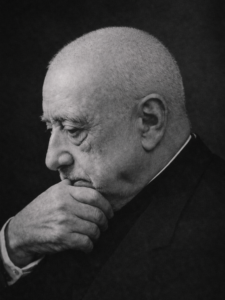 José Leite Barbosa passed away on 13 March 1972, at the age of 79, at his residence in the parish of São Pedro, Ponta Delgada. He was an illustrious Azorean poet, journalist, and playwright, a leading figure in 20th-century literary and theatrical culture in São Miguel, renowned for his contribution to the establishment of the theatrical revista (revue) and popular poetry.
Born on 22 January 1893 in São Paulo, Brazil, to parents from São Miguel, he moved to the island as a child. From an early age, he revealed a vocation for the performing arts and writing. His work was part of the Portuguese revista tradition, a genre that utilised social satire, criticism of customs, and popular culture as a form of artistic expression. His work achieved great acclaim from the local public and emigrated Azorean communities, particularly in the United States.
His extensive bibliography began with the award-winning play Órfãos da Ventura (1916), followed by the book Átomos de Alma (1917) and other works, including Na lama and Cravos e Goivos. He was a prolific revisteiro (revue author), publishing titles such as Sem pés nem cabeça (1923), Lanterna Mágica (1931), No país da Graxa (1940), Manta de Retalhos (1942), Aqui, Ponta Delgada (1946), Pé de Vento (1947), Toma lá dá cá (1950), Vai no Balão (1951), Bota Abaixo (1960), Tento na Bola (1963), Pontos nos ii and Há Festa na Fajã (1965), as well as Fado Corrido and É de Gritos (1965). Some of his revues were performed beyond the Azores, including in emigrant communities, helping to preserve Azorean cultural identity abroad.
He also published the volume of poetry Coração às Mãos and several comedies, most notably Quem tem telhados de vidro, performed in 1964 at the Coliseu Micaelense. His literary output is characterised by poetic sensitivity, a deep knowledge of the popular life of São Miguel, and the ability to transform social observation into accessible and emotive artistic language. On 14 July 1966, he celebrated the 50th anniversary of his literary debut, an occasion honoured by various regional and national newspapers.
Beyond his literary and theatrical activities, he was the editor-in-chief and, for 32 years, the director of the weekly A Ilha. He also directed the Theatre Group of the Casa do Povo of Fajã de Baixo and collaborated with the magazine Açores, contributing significantly to the development of the regional press and the cultural life of São Miguel.
The Funeral
His funeral took place on the 13th at 4:30 PM, proceeding from his residence in the parish of São Pedro to the São Joaquim Cemetery. The service was presided over by the Vicar of São Pedro, Father José Baptista Ferreira. At the cemetery entrance, two turns of pallbearers were organised:
1st Turn: Dr. Lobato de Macedo (Director of Açoriano Oriental), Manuel Ferreira (Editor-in-Chief of Correio dos Açores), Luciano Mota Vieira (Assistant Director of the newspaper Açores), and Dr. Carlos Carreiro (Director of Diário dos Açores).
2nd Turn: Prof. Teotónio Machado de Andrade (Editor-in-Chief of A Vila), Victor Cruz, Victor Pedroso, and Manuel Inácio de Melo (dedicated collaborators of A Ilha), as well as close family and friends.
The mourning was led by Engineer Vaz do Rego, President of the District General Board, followed by the funeral eulogy delivered by Mr. Dinis José da Silva, who evoked the human and artistic personality of the deceased, highlighting his generous spirit and contribution to Azorean culture:
“Gentlemen:
José Barbosa has died. We are here, around his coffin, in pious tribute to the man and the intellectual, the friend of all. Yes, of everyone, because his heart was large, generous, and good.
But, gentlemen, in that coffin are only the remains of death. Yet the death that exterminates the body does not exterminate the man: it is neither the extinguishing of the spirit nor the annihilation of life, for life is spirit, and spirit does not die; it is not inside that coffin.
José Barbosa, journalist, poet, and man of the theatre, author and actor he lives on in the memory and longing of all who knew him and, knowing him, esteemed and admired his distinct personality… and, culminating all these traits, his kindness yes, the kindness that brings man closer to God, his creator.
As a poet… few like him knew how to speak to the soul of the people, those people to whom he dedicated all the yearnings of his inspired artist’s soul. His verses remain… flowing like the singing waters in the streams…
In his theatrical activity so rich in beauty and humanity, he was a source of pure joys. His knowledge of the life of the people, their sighs and their needs, found in José Barbosa a talented interpreter.
Fortune did not favour him, and for that reason, working always until a few days before the battle he would eventually lose he lived like a poor man and died poor in holy poverty!… And never, in over six decades of friendship, did I hear a word of revolt against the fate that had been so stingy to him!…
He was not a practicing Catholic… but he never ceased to be a believer. Many of his verses say so… and how could it be otherwise, for a soul as pure as José Barbosa’s, who, in his poverty, never ceased to cultivate charity… and pity for those who fell into indigence!
The people to whom you belonged and whom you loved sing your verses… and when a man writes poetry as pure as that which you left us, that man does not die, because he remains living in his works for all time.
My dear José Barbosa and gentlemen: this is not the moment to take inventory of the life of the journalist, the poet, the prose writer, and the man of the theatre. The moment is one of compunction, of pain, and already of longing… Goodbye, dear friend, rest in the bosom of God eternally.”
The speech recalled his literary and theatrical talent, his connection to the people of São Miguel, and his life of work dedicated to the arts and journalism. The community to which he belonged continues to sing his verses, set to music by regional composers, keeping his artistic memory alive. José Leite Barbosa remains a landmark figure in Azorean literature and theatre.


