

Aurélio Augusto César
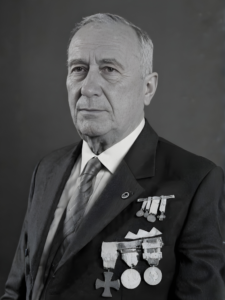 Aurélio Augusto César, a distinguished soldier, nurse, politician, sportsman, and Micaelense journalist, passed away on 30 January 1969, at the Clínica do Bom Jesus in Ponta Delgada, at the age of 76. He was born on 24 November 1892 in the parish of São Sebastião, Ponta Delgada. As a soldier, he enlisted on 8 January 1909, as a volunteer, in the 26th Infantry Regiment in Ponta Delgada.
After a long period of leave, he returned to active service on 1 May 1912, transferring to the 1st Group of Health Companies on 1 April 1913. In 1914, he completed the 1st Grade of the Nursing Course at the Lisbon Hospital School (Estrela). He was deployed to the province of Angola, embarking on 27 May 1915 and arriving in Moçâmedes on 15 April 1915. He returned to Portugal on 6 December of that same year, disembarking in Lisbon.
His participation in the First World War (1914–1918) was described and evaluated by the eyewitness testimony of Colonel Rodrigo Álvares Pereira and Major Eduardo Reis Rebelo. For services rendered to the Portuguese Army and the Homeland, he received several decorations:
- War Cross 3rd Class (29 November 1922)
- War Cross 1st Class (18 August 1923)
- Exemplary Conduct Medal (22 May 1915)
- Victory Medal (30 October 1919)
- Medal of Praise from the Portuguese Red Cross Society (22 November 1919).
He ended his military service due to physical incapacity on 2 December 1919, with the rank of 1st Corporal. After returning to Ponta Delgada, he became a member of the “Antero de Quental Socialist Centre,” along with his brother Manuel Augusto César. In 1917, he opened the nursing centre “Casa de Pensos de Aurélio César,” recognising the lack of human and material resources in healthcare provision, and distinguished himself through voluntary nursing support in the fight against the pneumonic influenza pandemic, known as the Spanish Flu, in 1918.
As a life member since October 1919 and an active co-operator of the Ponta Delgada delegation of the Portuguese Red Cross Society, he was awarded the Distinguished Service Medal, the Medal of Merit, and the Medal of Gratitude by this institution. In 1954, he received his professional nursing license from the National Union of Nursing Professionals.
At a socio-political level, he became the Acting Secretary of the Santo António Parish Council on 19 November 1933, a position he held until 5 January 1941, and Acting President of the Administrative Commission of the parish of Santo António on 2 January 1942. Furthermore, he served as chief machinist at the Fábrica de Tabaco Micaelense and the Fábrica de Tabaco Estrela, and as a teacher at the Viçoso May Drawing School, which later became the Industrial and Commercial School of Ponta Delgada.
He also worked as a reporter and journalist for the newspaper Correio dos Açores, where he began in March 1922 and served for 32 years. As a sportsman, in addition to being the goalkeeper for the “União Sportiva dos Empregados do Comércio,” he was the founder of the football club “O Esperança.” His funeral took place on 31 January, following a Requiem Mass at 11:30 am in the chapel of the Clínica do Bom Jesus, proceeding by hearse to the São Joaquim Cemetery.


