

Cristiano Frazão Pacheco
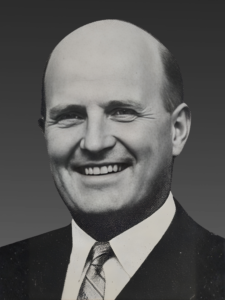 Cristiano Frazão Pacheco, who was one of the most important Azorean industrialists of the 20th century, passed away in Lisbon on 3 May 1964, at the age of 78. He was born in Ponta Delgada on 22 August 1885 and completed his secondary education at the Liceu de Ponta Delgada, later moving to Lisbon, where he studied at the Escola Académica and in the Higher Course of Letters at the University of Lisbon.
In 1904, together with Agnelo Casimiro, he founded the literary magazine Nossa Terra, which was closely aligned with the neo-Garrettism of the early 20th century. He withdrew from his course in Lisbon and moved to Paris, where he obtained a Bachelor of Letters and attended the Collège des Dames Anglaises. He became familiar with the intellectual circles of the French capital and was responsible for the publication of a large portion of George Sand’s letters in two Parisian magazines. He was a translator of Eça de Queirós into French, with his translations of the author’s short stories and the novel The Mandarin being particularly noteworthy.
He left a vast body of work in the Paris press, sometimes using the pseudonym Claude Frazac. From an early age, he cultivated a polemical vein which he developed over time, influenced in no small part by Eça de Queirós. While associating in Paris with the children of the writer Manuel Pinheiro Chagas, it was within this illustrious family that he met Valentina Pinheiro Chagas, the youngest daughter of the great Romantic writer, whom he married in Paris.
He returned to Ponta Delgada and, in 1913, founded Sociedade Corretora, Lda., which would dedicate itself to the production and trade of pineapples and various types of preserves. A few years later, driven by the need to resolve the issue of maritime transport to which the pineapple industry was implicitly linked, he founded the shipping company Companhia de Navegação Carregadores Açorianos after the First World War to assist in pineapple exports.
A moderate Republican, he was one of those responsible for the founding of the daily newspaper Correio dos Açores in Ponta Delgada in 1920, the direction of which was entrusted to the monarchist José Bruno Carreiro and the republican Francisco Luís Tavares. He was also behind the founding of the daily newspaper A Ilha in Ponta Delgada on 1 May 1939, whose first director was his friend Agnelo Casimiro. The newspaper initially aligned with the ideology of the Estado Novo. It became a weekly publication in September 1940. With the directorship passing to José Barbosa, a man of republican and democratic convictions, the newspaper became the unofficial mouthpiece of the Democratic Unity Movement of Ponta Delgada in 1945 and the subsequent years.
During the Second World War, he began to promote the canning industry, especially for pineapple, fish, and meat. The recognition of his career was reflected, among other distinctions, in the awarding of the rank of Officer of the Military Order of Christ. In recognition of his historical importance and the legacy left to the Micaelense community, the city of Ponta Delgada named a street after him in the parish of Relva, perpetuating his memory within the urban space. He was buried in Ponta Delgada on 6 May 1964, in the São Joaquim Cemetery, following a Requiem Mass at the Colégio Church. The memory of Cristiano Frazão Pacheco remains associated with entrepreneurship, culture, and a commitment to the progress of the Azores, forming a lasting part of the historical heritage of the city of Ponta Delgada.


