

Dom Jaime Garcia Goulart, Bishop of Dili
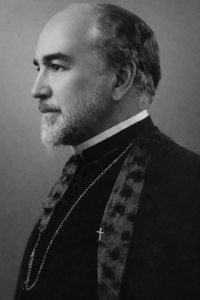
His Most Reverend Excellency, Dom Jaime Garcia Goulart, the 1st Bishop of Dili, passed away on 15 April 1997, at the Clínica do Bom Jesus in Ponta Delgada, at the age of 89.
Born on 10 January 1908, in Candelária, on the Island of Pico, Dom Jaime Garcia Goulart was inspired by the example of his cousin, Dom José da Costa Nunes, the then Bishop of Macau. At the young age of 13, on 22 June 1921, he left his homeland to pursue his missionary ideals, entering the St. Joseph Seminary in Macau.
Between 1930 and 1931, he attended the Seminary of Angra do Heroísmo, where he was ordained a priest on 10 May 1931. He subsequently returned to his birthplace, celebrating his first Solemn Mass in the parish of Candelária do Pico on 15 May. In the same year, he returned to Macau, where, at only 24 years of age, he was appointed a missionary of the Portuguese Padroado of the East, serving as secretary to the Bishop of Macau and teaching at the local seminary and high school.
From 1933 to 1937, he served as coadjutor and later as Superior of the Solobado Mission in Timor, where he founded the Our Lady of Fatima Pre-Seminary on 13 October 1936. Transferred back to Macau on 8 September 1937, he once again served as the prelate’s secretary and as a professor at the local high school and the Santa Rosa de Lima College. In 1940, he returned to Timor, being appointed Vicar-General of the Timor Missions on 22 January 1940.
Under the papal bull Sollemnibus conventionibus of 4 September 1940, the Diocese of Dili was created, and Dom Jaime Garcia Goulart was appointed Apostolic Administrator on 18 January 1941. With the outbreak of the Pacific War, the situation in Timor deteriorated following the Japanese occupation, forcing him to seek refuge in Australia in 1942.
Dom Jaime was appointed the 1st Bishop of Dili on 12 October 1945, and was consecrated on 28 October of the same year at St. Patrick’s College Chapel in Sydney, Australia. The ceremony was attended by high-ranking Church dignitaries, including the Apostolic Delegate to Australia and future Cardinal, Giovanni Panico, highlighting the international recognition of his mission.
He made his solemn entry into his diocese on 9 December 1945, finding it devastated, with much of the pastoral infrastructure in ruins as a result of the Japanese occupation. As the Prelate of Timor, he dedicated special attention to missionary work and the formation of Timorese priests. During his episcopate, the number of Catholics in the diocese grew from approximately 30,000 to over 150,000, and the number of students in mission schools increased from 1,500 to 8,000.
During his tenure, Dom Jaime Garcia Goulart participated as a “Council Father” in the first three sessions of the Second Vatican Council (1962–1965), contributing to the work of this landmark council of the Catholic Church.
In 1952, he was honoured by the Portuguese government with the rank of Commander of the Military Order of Christ for his services in Portuguese Timor. On 23 May 1964, he was further distinguished as an Officer of the Order of Prince Henry (Infante D. Henrique), an additional recognition of his services to the mission and the Portuguese community.
Citing fatigue and declining health, Dom Jaime requested the appointment of a coadjutor bishop with the right of succession in 1965, and Dom José Joaquim Ribeiro was appointed. He resigned on 31 January 1967, holding the title of Titular Bishop of Trofimiana until 27 January 1971, at which point he became the Bishop Emeritus of Dili.
In August 1967, he returned to the Azores, initially settling in the city of Horta, on Faial Island, before moving back to his birthplace on Pico, where he directed the St. Joseph’s Children’s Patronage. Due to health reasons, he later moved to reside with family on the island of São Miguel, where he eventually passed away.
His funeral took place at the São Joaquim Cemetery in Ponta Delgada, following a Mass celebrated at the Matriz Church of Ponta Delgada by Dom António de Sousa Braga, the Bishop of Angra.


