

José de Almeida
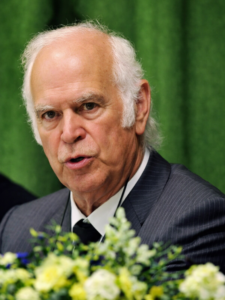 José de Almeida, the historic leader of the Azores Liberation Front (FLA), was born on 10 July 1935 in the parish of Remédios, in the municipality of Ponta Delgada. The son of António de Almeida and Sara da Conceição, he was the 18th child of a farming family from Bretanha. He was married in a Catholic ceremony on 9 October 1961, in the parish of Odivelas, to Maria Teresa Rodrigues de Matos.
Initially destined for a religious life, he attended a seminary in northern Portugal for his secondary education. He later chose to pursue higher education, graduating in Historical-Philosophical Sciences from the University of Lisbon. He completed his military service in Angola during the colonial war, an experience that profoundly shaped his political and social outlook. He later served as a secondary school teacher in Viana do Castelo.
During the Estado Novo political period, he was elected as a Member of the National Assembly in 1973. His mandate ended with the Revolution of 25 April 1974, a moment that deeply marked his political path. Upon returning to the Azores, he became actively involved in the emerging Azorean independence movement, becoming a charismatic figure who mobilised various sectors of the population.
He was one of the primary drivers behind the creation of the Azores Liberation Front (FLA), a political movement founded in London in 1975, which advocated for the self-determination of the archipelago during the period of political instability following the Portuguese revolution. The FLA organised political actions and public demonstrations, most notably the protest on 6 June 1976 in Ponta Delgada, which gathered thousands of participants and marked regional political history.
José de Almeida also developed activities within the Azorean emigrant community in the United States, seeking international support for the Azorean cause. He founded and directed the newspaper “O Milhafre”, a publication in which he publicly defended the autonomy and independence of the Azores. This position led him to face several legal proceedings, of which he was acquitted, as the courts deemed the defence of his political stances to be legitimate.
In the context of consolidating regional autonomy, he maintained a political dialogue with João Bosco Mota Amaral, contributing, according to various analysts, to the evolution of political negotiations that strengthened Azorean autonomy. Until the end of his life, he maintained his political discourse, publicly stating that the independence of the Azores should remain a legitimate political option for the future of the archipelago.
He passed away on 1 December 2014, at the age of 79, at the Hospital do Divino Espírito Santo in Ponta Delgada, following a prolonged illness. His funeral took place on 3 December, following a Eucharistic celebration at the Chapel of Nossa Senhora das Mercês, Bairros Novos, with the funeral cortege proceeding to the São Joaquim Cemetery in Ponta Delgada.
In 2017, the Ponta Delgada City Council paid him a posthumous tribute by placing a plaque on the house where he was born, in recognition of his historic and political role in the recent history of the Azores.


