

Rebelo de Bettencourt
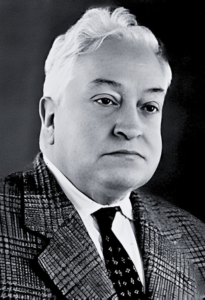
José Rebelo de Bettencourt, a notable Azorean writer, poet, and journalist, passed away on 4 September 1969, at the age of 75, at his residence in São José, in the municipality of Ponta Delgada.
He was born on 30 August 1894 in the parish of São Sebastião, Ponta Delgada. He attended the Faculty of Letters in Lisbon and a college in London, but eventually left his degree to embrace journalism. He was a contemporary of several renowned Portuguese writers belonging to the “Orpheu generation,” which included Fernando Pessoa. He was a companion to Armando Côrtes Rodrigues, Santa-Rita Pintor, and Almada Negreiros, and a student of Teófilo Braga, to whom he dedicated one of his works. He participated in the Futurist movement in 1917 alongside Santa-Rita Pintor, but soon moved toward literary nationalism, developing a style of journalism focused on the Azores and distanced from the national literary circles.
As a journalist, he began collaborating with Diário dos Açores in 1912, becoming a correspondent for Brazilian publications, and worked for the newspaper Século between 1917 and 1918. He founded the newspaper Distrito in Ponta Delgada, served as an editor for A Pátria in Angra do Heroísmo, and collaborated in Lisbon on the Gazeta dos Caminhos-de-Ferro and the tourism magazine Viagem, both directed by Carlos de Ornellas. His journalistic activity was vital for the circulation and promotion of modern Portuguese authors, even publishing previously unseen poems by Fernando Pessoa in the Azores.
His literary body of work was vast and diverse, including five books of poetry, six books of essays and chronicles, a book of short stories, various translations, and numerous collaborations in newspapers and magazines, consolidating him as one of the most prolific Azorean writers of the first half of the 20th century. From his Futurist period, he published the anthology of chronicles from the magazine Portugal Futurista titled O Mundo das Imagens, and three poetic anthologies: Cantigas (1923), Oceano Atlântico (1934), and Vozes do Mar e do Vento (1953). He authored literary and theatrical critiques, as well as essays on authors such as Antero de Quental and Teófilo Braga. In 1930, he published one of the first critical essays on Fernando Pessoa, standing out for his insight and forward-thinking vision within the Portuguese literary landscape.
In his memory, the book Rebelo de Bettencourt: Raízes de Basalto (Roots of Basalt) was published on 26 April 2014. Written by researcher Anabela Mimoso and edited by Seixo Publishers, a Canadian press created by his grandson Eduardo Bettencourt Pinto, the book explores his literary legacy. His name is also honoured in the toponymy of Ponta Delgada, with a street named after him in the parish of Livramento.
His funeral took place at 9:00 am on 5 September, following a funeral mass at the Church of São José, from where the procession proceeded to the Cemetery of São Joaquim.
“Those who habitually read my articles know as well as I do that, when I write for the press of my island, it is always the Azorean subject to which I give my preference. Thirty years in Lisbon did not ‘un-country’ me, if you will allow the expression. I continue to be the same Michaelense as always, to such an extent that, in my best verses those in which the native landscape is most guessed I do not fail to let my quality as an islander shine through. I have often said and written that when one is born Azorean, it is forever.”
— José Rebelo de Bettencourt (Gazeta dos Caminhos de Ferro, no. 1454, 16 June 1948)


